Math Mentoring: The Struggle is Real AND it’s an Asset!

Struggling in math has been my greatest asset as a math teacher.  Remembering the pain of negative self-talk while feeling like giving up was my only option…well, math trauma is not easily forgotten. It’s why so many adults, decades after high school graduation, will still tell you they are bad at math. For me, the silver lining to that trauma has always been the ability to relate to my students, and even my own children, when they have math struggles.  One of the greatest compliments students and former students have shared with me is that math finally made sense to them when they were in my class. 

One thing I’ve never said, and will never say, to my children is that I was bad at math.  Even as a new teacher, I asked parents not to say that to their children. Telling your children or students you are bad at math is like encouraging them to quit before they even begin. 

Now, I have always told my students and children that I struggled in math.  We all understand what struggle means, and the good news is that there is always the possibility of winning in a struggle!  Every year, I tell them how I had to stay in at recess in first grade because I could not understand the concept of subtraction.  Crazily enough, my teacher had no idea how to teach it in a new way that made sense to me. She tried to explain it repeatedly in the same way…and it didn’t make sense to me for the longest time.  I also tell them about how in first grade I received a C in math and it made me feel terrible. I never wanted another C on my report card and made sure I never did again. That desire to make the Honor Roll (I was a middle child and wanted to stand out in some way, and academically was my route) kept me from quitting.  Math was a struggle, but I found a way to understand. As early as seven years old, I realized that quitting was not an option. Finding math success was never easy for me, but through my school years, I found what worked for me. This is what I share with my students hoping it will help them, too. 

Addressing the Struggle at the Beginning of the Year

First week of school when I say the word “math”I look around to see who dreads the very word itself. It’s not just about reading expressions, but I look for patterns of misbehavior and any kind of drama that might commence when that dreaded word is spoken.  I always begin the year assuring my students that if they stick with me and trust me, as their math teacher, I will not leave them behind. I have promised that to my students for years, and I mean it with every fiber of my being. I explain that when they don’t quit, math can be fun like a puzzle.  

What does it take to help children dig into math when they want to check out? It takes patience and time to do it to do it to do it to do it right, child, I got my mind set on math, I got my mind, set on math… 

All singing aside (remember He gave me a melody *wink wink*), in a whole group lesson, the ones who get the concept easily, I normally allow them to begin the assignment and do it at their pace.  The students who have questions stick with me and the ones who are lost become a small group.  
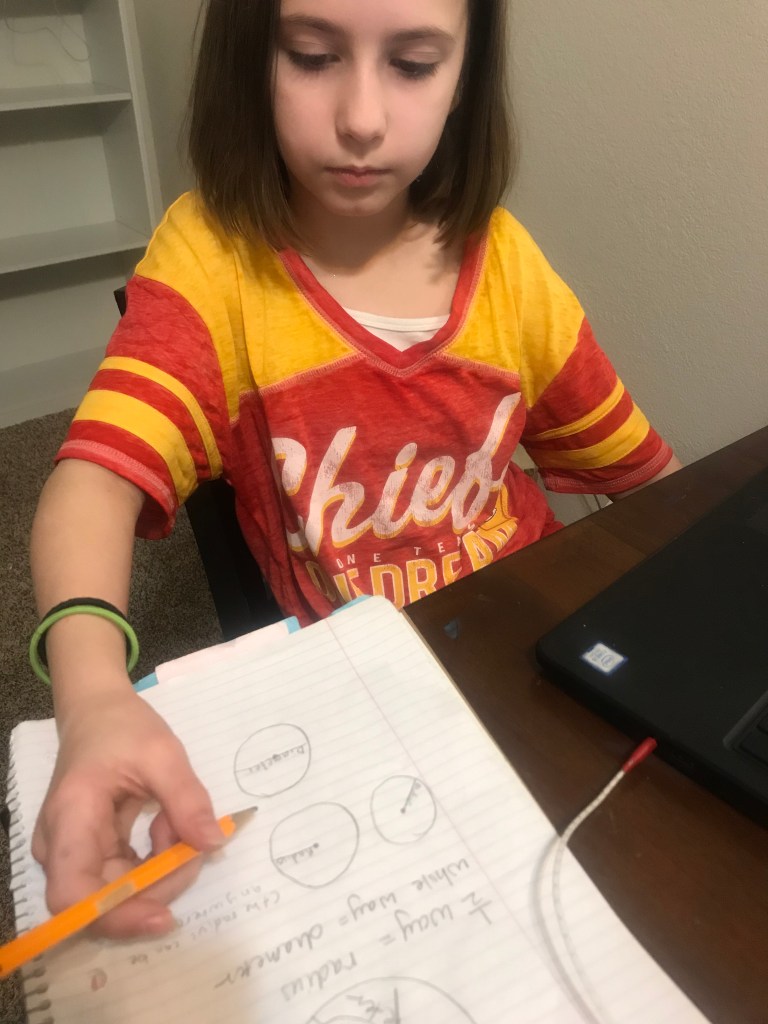
Helping my own child, a fifth grader review geometry!

What does helping kids through math struggle look like?

Sitting next to a child who struggles is important.  That nearness factor makes a difference. They know I won’t ignore them or allow them to pretend to work when really they are just doodling or trying to look busy.  See, by the time they reach fifth grade, they’ve pretty much given up. They don’t want the attention! One of my students, who was desperately struggling, knew how to look busy, so sitting next to me kept him from trying to con me that he was actually trying to solve problems.  He definitely tried to trick me, but I called him out. A few more times like this, and he knew I meant business. He stopped trying to look busy and started attempting the problems before him. Just attempting…finding a starting place to solve is huge when you struggle in math.  I remember this from my own childhood. 

When students have progressed to where they begin solving problems more easily, I still encourage them to ask for help, but I do not let them come to me unless they have attempted the problem.  I can ask them, “What do you think you are going to do here?” or “Where do you think you should start?” They are so used to struggling and the teacher just giving them an answer that they often ask before even thinking about how/where they should begin.  Getting them to dig in and try to understand the problem is foundational in developing grit and sticking with the problem. When solving math equations or word problems, it’s truly important to have a place to stick information to, so beginning the problem and attempting to solve it gives them something to add or learn from. If they don’t think through this first part, a teacher’s lesson is like throwing darts into the dark without any specific target that will reach their students. 

I also coach my students while giving notes. At some point, they may stop understanding. I coach them to keep taking the notes I give them, but make a note to themselves that this is where they have stopped understanding.  Again, I learned this from my own struggles. In fact, in my Algebra one course when the teacher was finished with the lesson and asked for questions, I was able to ask my questions clearly. To do this well, I had to turn off my negative self-talk.  If I allowed my negatiave self-talk to take over, the only thing I heard from that point on was me telling me how stupid I was and how I was the only person not understanding. In place of negative self-talk, I encouraged myself to take a deep breath and remind myself that even though I didn’t understand the concept just then, I knew I would eventually if I didn’t shut down.  That allowed me to keep paying attention and sometimes even cleared my confusion. When I shut down, this wasn’t possible.  

Something else that helps students is allowing them to talk about patterns they notice.  Whether they struggle or not, when they notice a math pattern, letting them talk it out with the rest of the class will help everyone!! Worst case, it’s also a way a  teacher can help clear up misconceptions early on. The best math teachers for me were my peers. Sometimes students identify specific items that make a world of difference for their peers. My son is in third grade and has a more natural way of understanding math than his older sister.  Whenever he notices a pattern, he stops and we have an entire conversation about it. He truly amazes me. We can, and should, help our students learn the patterns because often times when they figure it out for themselves, they feel more confident and the knowledge isn’t dumped after an assessment. My son talking about the patterns he sees also helps his older sister and younger sister think through that math pattern, too.  That’s a win!!

It’s a Journey

For students who struggle in math, it is an emotional journey.  When teachers stop and say, “I know you are struggling, and I’m here to help, and I won’t go on until you understand,” it’s a balm for our students’ insecure nerves. When they are fifth graders coming to me, they usually have three to four years of feeling left behind.  Hoping to help my struggling students, my mindset is firm that their struggles stop with me and I do all in my power to get them to grow and decrease any learning gaps.  

Over time, I have developed the wisdom necessary to see when students quit before even trying or when they are totally overwhelmed.  It’s important to know the difference because both situations require different responses. The quit-before-trying-learner needs a firm reminder of not giving up and figuring out a place to start, while the overwhelmed learner needs to know they can take a break or use another method to help them.  

Helping students dig into math struggles is such a beautiful way to help them learn perseverance and purpose.  When they decide to lean into the struggle, they form a mental confidence that can’t be stolen from them. Can you see how facing their insecurity in math can help them in other areas of life, too? Having a teacher who will go the whole distance means everything for these students, and many times, changes a negative academic course into a new path of learning and goal setting!  I have seen the glory! I have seen the joy of confidence from the same student who broke down and cried with me at one point. So yeah…when my students have told me that my fifth grade class was the first time math made sense to them, I feel like I’ve earned an Oscar! 

Resources 
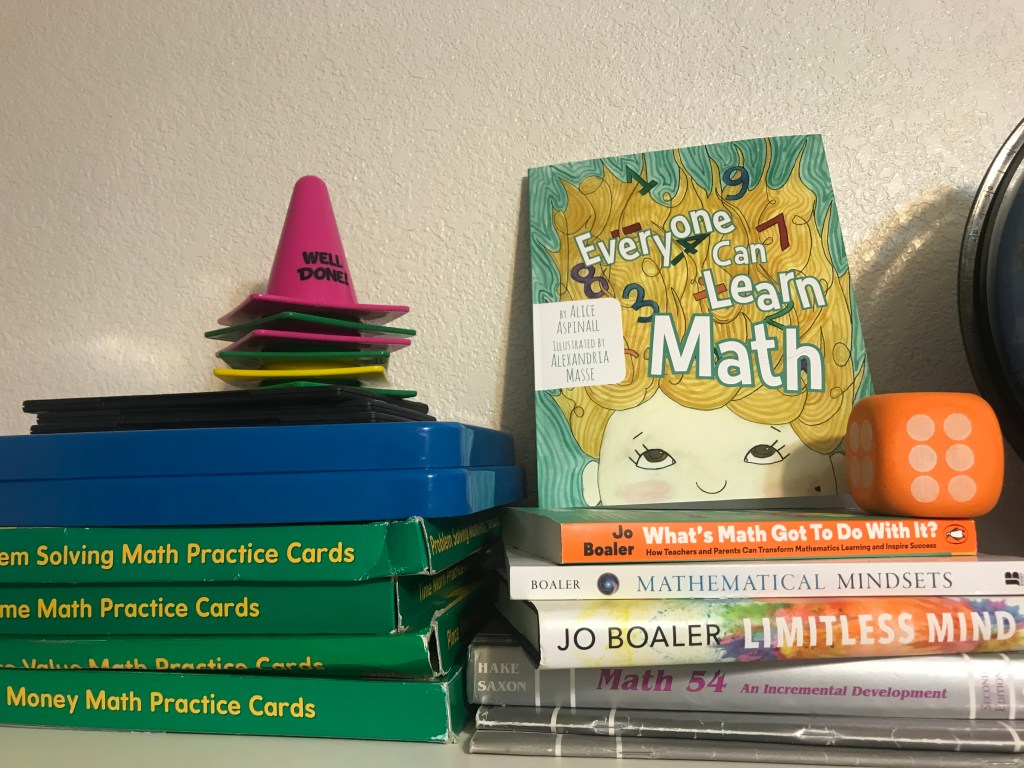
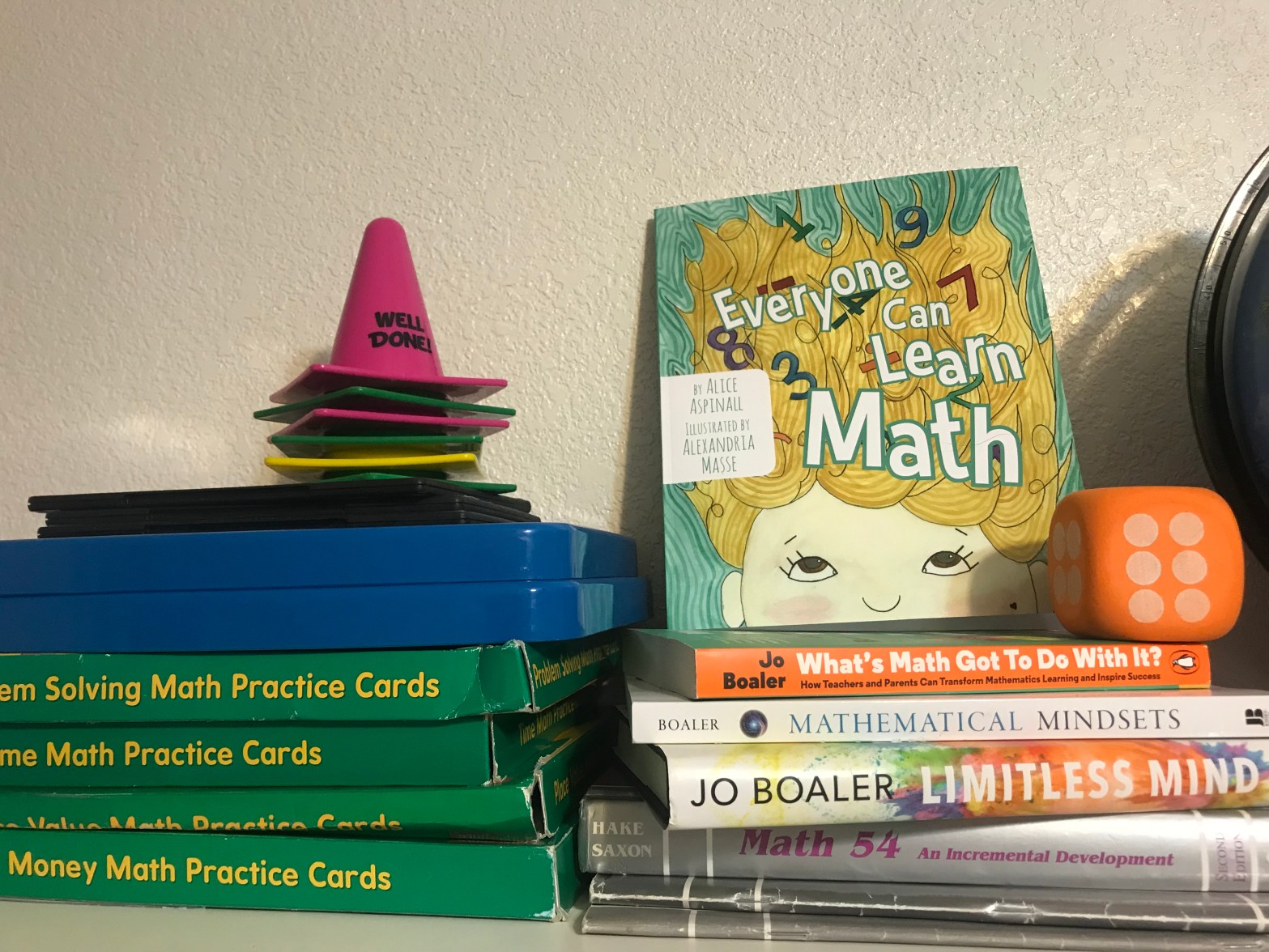
Have you heard of the book written by Alice Aspinall called Everyone Can Learn Math? Recently, I read it with my five children and it sparked great discussion.  My oldest, who is currently in fifth grade, found the main character, Amy, very “relatable.” Amy feels the math struggle deeply and so does her mom! I would recommend this book for every parent and educator to keep in their home or classroom library.  I know we will be pulling it out to reread a lot. It’s also a good way to combine your academics. Author, Alice Aspinall also recommends Adding Parents to the Equation by Hilary Kreisburg and Matthew Bayranevand. 

Also, have you heard of Nearpod and Flocabulary? When I went back into teaching public school a few years ago, they were the first technologies that I implemented in my lessons.  My students and children love it. They can be personalized or differentiated for the different level of learning going on in your classroom. These resources are engaging and will definitely make a difference in small group learning.  The coolest part is now they are together!!! 

Before Christmas, I went to the Anchorage Barnes & Noble and bought some new books by Jo Boaler in hopes of helping me grow in teaching and understanding the math struggle: What’s Math Got To Do With It, Mathematical Mindsets, and Limitless Mind.  There is another book called Math Recess: Playful Learning in an Age of Disruption by Sunil Singh that I hope to purchase and read. All of these books, and both of these authors, are mentioned frequently when the topic of math struggles come up–and they do frequently! We can also Google their videos!  

What are resources that have helped you? Let’s work together to help our students learn through the math struggle! 

Making Time for Family in the Digital Age

Last week I had the honor and pleasure of hosting a webinar for a parent communication platform, ParentSquare Learning Network, regarding making time for family in the digital age. We talked and collaborated as educators and parents on what that looks and feels like. In preparation for this webinar, I definitely had to self-reflect on my own practices as an educator and mother of five. My reflections and discussions led me to this conviction: we need to know how to use tech in our homes and classrooms in a way that bridges us with the people in front of us and that wisdom is often learned after making mistakes.

Follow the #PSquareLN on Twitter!

As parents and educators, we can talk until we are blue in the face about what our students and kids should be doing. We can give them all the right answers and they may believe that we are the most knowledgeable people on this planet. But my own experience has shown that what we say matters less than what we do. At home, when I read, my kids want to read. When I watch TV, my kids play near me even though we have a dedicated space for a playroom. When I’m on my phone, they fight about who can be on the iPad or laptop. My kids want to be near me and do what I do! So teaching our kids by our own examples is the really the most effective way to show our values and priorities. The question is, do our words and actions align? I can honestly say that in our home, as of late, we have depended on too much technology to fill in time, so going into the winter break, we are going to actively do better about being present with one another.

There are ways to combat the use of too much technology. I put my phone in another room, up the stairs, when I need or want to be fully present with my family. Other things we discussed in the webinar are setting a timer, making sure our kids are under supervision, and setting a rule of no devices at the table. While our kids are spending more time with family during the winter break, it’s easy to let them have their iPads and play for longer periods of time. However, like my friend and mentor Mandy Froehlich shared with me, every minute we spend online is a minute we are trading for other things, such as spending time with our kids. A timer would be a great way to illustrate the quantity of time we spend on our devices. I’ll be the first to admit that I need to cut back!

Things we can do without needing our devices:

Baking,

Writing/illustrating stories,

Exploring nature,

Reading alone or together,

Praying, meditating, reading about our faith,

Creating meaningful experiences in our community,

and HAVING CONVERSATIONS!

I mentioned in the webinar that having conversations with our kids is free but is so costly if we don’t have them. We learn what our kids need from us when we regularly converse with them. We can get out of practice when we spend too much time on our devices, but the good news is we can make sure to get back to what is important. There is a message that has stayed with me for years: if we don’t stop and listen to the little things our kids are trying to tell us now, then don’t expect them to trust us with the important things later. When we spend time in conversation, even when it’s silly, we are actively learning about our children (or students) as they are revealing their personalities and values to us. Have you ever looked at your child and thought, “I don’t really know you very well anymore.” Honestly, many of us have had this thought, and when we want to know our children more deeply, we need to remember to make sure they know and feel like we are present and listening to them.

Using an app to capture some fun moments with my family!

As an educator, building community was my overreaching goal for the entire year. Welcoming parents and families was part of the success I had in forming deep connections with my students. Communication is key. Sharing our classroom experiences through our digital parent communication platform was a way I bridged what we were doing in class to home. It was also how parents helped me bridge home to school. I hoped using a communication platform and sharing with parents would stimulate conversation and encourage participation in school and class wide activities. However, digital tools can only go so far. I also had to make time for face-to-face and phone conferences. Digital resources can easily lose context so some messages should never be shared in any form except face-to-face or by phone.

The best way to ensure quality time in this digital age is to find a good balance. We can draw from our own past experiences as we remember that our parents did not record every single moment of every single event. At family gatherings, we’d take time to get everyone in pictures, but we spent more time talking and playing. Our culture feels the need to record and share everything, but when we are honest, we know that we lose out on being present when we are always looking for the perfect shot or recording instead of participating.

Using technology is not evil. Using our devices to write emails, find new recipes, and share important life events is also part of our culture and there isn’t anything wrong with these things. It’s always the extremes that kill our ability to be present. My own personal reflection on spending too much time on my device is often when I’m feeling overwhelmed in daily responsibilities or feeling disconnected from community. Have you ever thought about what may lead you or your children to spend mindless hours online? Having this information and reflection is a great way to start combating the timesuck of being online.

Each ornament is symbolic for a family member. The red door for 2019 was my husband’s for opening a new door of dreams & possibilities!

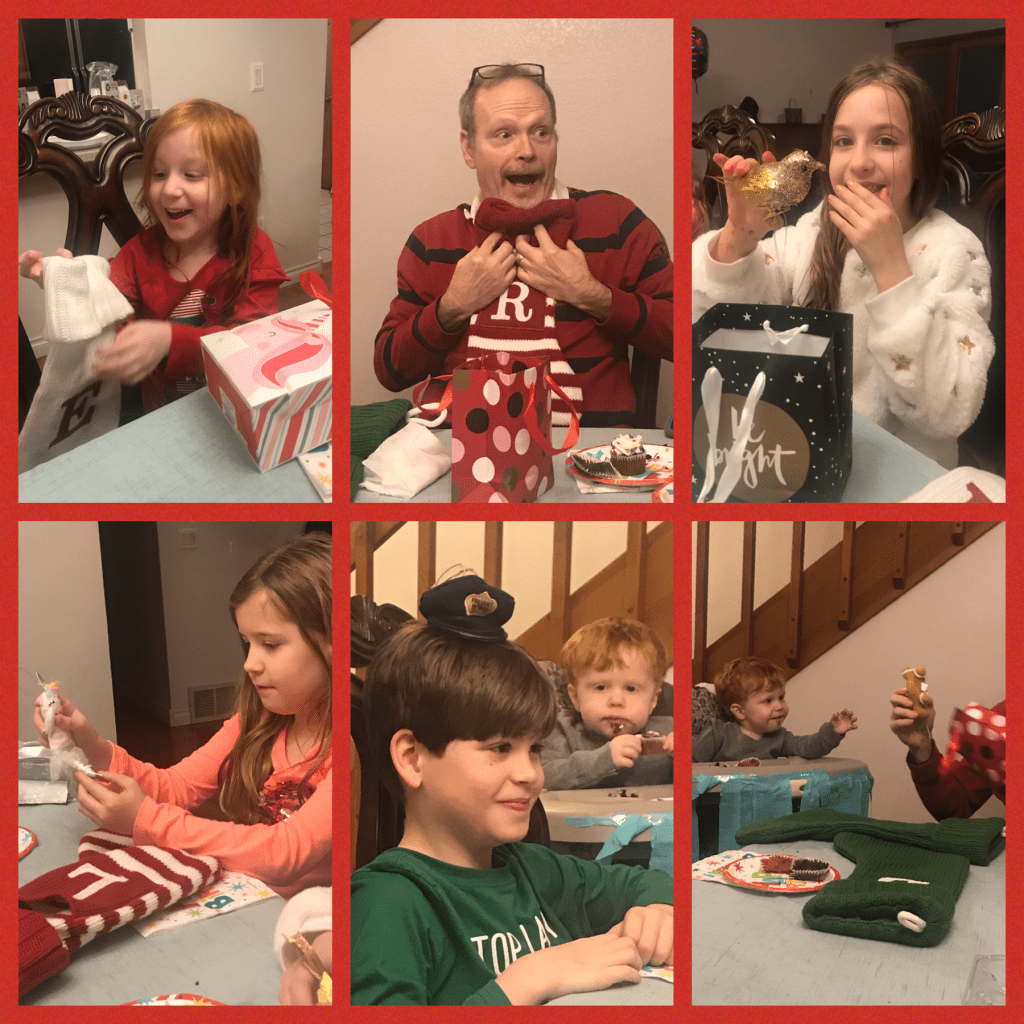
Finally, this holiday season, my family is starting from scratch in establishing new traditions. If you have followed my #onemonthgoals journey, this month I chose to share the Christmas Spirit all month long instead of doing one huge thing on Christmas morning. I knew if we really focused on spending quality time together this month, Christmas morning wouldn’t feel like a one and done thing. We are getting to know our new home better, learning the traditions of our new community, and really learning each other which was the most important reason for choosing to move to Alaska. Things we’ve already done together are having a book-unwrapping day and spending time just reading. Hot cocoa and cookie nights, holiday movies, gingerbread house making, and we’ll be participating in the winter solstice celebration this weekend. Last weekend, my husband and I picked out an ornament for each child and each other. We gave it to them with their new stockings. One by one we had each child open their new items and explained why each ornament was symbolic of them. We don’t have but a few ornaments on our tree, but the ones we have are meaningful.

Thank you so much for reading this! I hope you will share some traditions and ways you have quality time with your family. These are great conversations to have this season and may help us be more present as we welcome in 2020.

Outta My League: Where I Choose To Be

Do you ever feel completely out of your depth? Out on a limb? In over your head? I do all the time. In fact, when I returned to full time teaching in 2015, after a three year absence of staying home with my children, TobyMac’s song Beyond Me was my anthem.

Returning to work was necessary and the right thing to do, though very challenging at the time. We had to find in-home childcare for three of our four children (ages almost one year, two years, and four years old) and that was not an easy task. One of our vehicles bit the dust the day before my first day back and we did not have the finances to fix it. But still, I knew returning to teaching was the right thing. It wasn’t easy emotionally or physically to leave my babies. The fear of returning to a job I never dreamed I’d return to was REAL. On top of those issues, my dreams of staying at home and home schooling my kiddos had to bite the dust. Also, upon returning, I realized I was way behind in technology! It felt like too much, just too hard to deal with. Do you know what I mean?

The problems we faced did not go away because I returned to work, but it definitely helped, and we got to keep our beautiful home, so there’s that. In fact, the year of 2015-2016 truly sucked in so many ways. I admit that because maybe you are reading this and your current year is sucking, too. I feel that.

Through the suck, we did find for all of our problems, there were solutions. We found care, we bought a used car with my first paycheck, we kept our home, and I learned all I could about education technology. Not finding solutions wasn’t even conceivable, right? When lives are in your care, their importance fuels you to go on even when you feel like the circumstances are too hard to conquer. My children and students were important enough to me to strike out and find a way.

This is where you insert your faith, a good playlist, ask for help, and do whatever you have to do to find a way. It doesn’t mean problems disappear, but it does mean you’ll find new opportunities and new dreams await you when you forgive that the life you thought you would lead is no longer going to run in that direction. There is a lot of grace and forgiveness in that waiting area.

Currently, I still feel like I live outta my league. But now I see it as a good thing. I’m so extremely blessed to live this life and the sucky days brought forth many rainbows personally and professionally. Embracing challenges and opportunities is something I wish for all of my friends, colleagues, and family. When you decide to face your battles, the growth that sets in your mind and body will take you places, man! Embracing adversity is one way to get to the next level. We were never going to live easy lives. The curve balls will never stop being thrown in our direction, but we don’t have to fear them, either. I know that even if I strike out, there’s still a chance I won’t. Like my brother told me years ago, “Melody, if it’s there, swing!” Striking out doesn’t feel as scary as not swinging at all. Now that I’m living beyond me, the new challenges we face feel like more promises of something greater than previously experienced. Sure there are crappy days, but also new joy waiting around the corner! Do you feel it?

Today, I celebrate the new! New dreams! New directions! New friends! New places! And even new problems! This is what life is about. I’m so glad you are in this race with me.

Safe Spaces Aren’t for Snowflakes

In a couple of weeks, I’ll be presenting at one of the largest educator conferences in our country, #ISTE19.  I’ll be presenting a 45-minute, interactive lecture about Using Edtech to Promote Inclusion and Diversity in the Classroom.  And as I continue editing my slideshow and talking points, those poignant moments when kids were brave enough to bare their souls and share about the labels and context this world had already put on them, flood my mind.  When I get nervous and doubt that I’m the right person to be sharing this message, I have to remind myself that I’m doing this for them and others like them.  Doubts that a white, privileged middle class American woman could offer anything that would help anyone else understand, well that’s a hurdle in my mind. I’m glad for it though, it will keep me humble and away from a know-it-all attitude.

There were times in my career when I wish I was recording conversations about race and culture so I could share with those, like me, who had no clue that young students were developing poor esteems based on their melanin levels.  Once during a guided reading lesson, an eleven year old told me he was Mexican but he didn’t like how his neighbors called him Mexican.  He said it made him feel bad.  This led a conversation around the table about the labels these kids were carrying.  One boy shared he didn’t mind being called black or African American.  Those were nice labels. One boy said he just wanted to be called Abraham, his name.   We chuckled when he said that because it lightened the mood.  I listened.  Honestly, what did I have to offer? I was super green as a teacher in a diverse classroom, and it was my turn to learn from my students.  If others could just hear them, too, maybe they’d see how lethal words could be, how devastating the n-word is for children developing into young people.

Safe spaces aren’t for sissies or snowflakes.  Young people need to share and we need to listen.  It is the greatest professional development…greatest people development that our profession can offer.  We can call it a classroom community, but kids who feel secure and loved will open up and allow you into their lives in transforming ways…for all involved.  My students were excellent teachers.

Diversity in education isn’t just about skin color or ethnic background.  There is diversity in learning styles, teaching styles, preferred communication, and levels of voice to name a few.  That’s why I love edtech.  It reaches beyond the habitual hand-raisers.  It gives everyone an opportunity to shine and share. (My favorite teaching tools are Nearpod and Flocabulary!)  But to reach students, and for them to desire to give us their best, that safe space needs to be in place.  It’s not for sissies and snowflakes, it’s for young people using their voices, learning how to speak up, and feeling comfortable to dust off after failure and keep trying.

This may be old news for you, but if not, and you are wondering how to grow that safe space, I want to put forth some considerations for you:

  1.  What are the assumptions you have about people of color, people who have a different religion, or people with preferences you don’t understand?  Even when we don’t say a word, our assumptions speak volumes.
  2.  How comfortable do you feel being around people who are unlike you?  Do you avoid it at all costs or do you embrace moments where you are in the minority?
  3. Mellody Hobson, in her TED Talk, suggests us to not hide from what makes us uncomfortable but to tackle it head on so we can get “comfortable with being uncomfortable” as that is where growth and success take place.
  4. Lastly, are you open to talking about current events that are weighing heavily on your students, even when you don’t understand the reasons?  When we listen, I mean really listen, we will learn so much about our students.

From personal experience, growing up in white America, we are taught to be color blind, keep away from talking about race relations, and thank God that we live in a better time where everyone is treated equally with the same opportunities as anyone else.  But talking and learning from others who grew up with a different perspective of America, we have a lot to learn.

For minorities and marginalized people, the opportunities aren’t always as plentiful and more walls have to be climbed for victory.  For many, using their voice to fight inequality gets them labeled with all sorts of stereotypes, and it’s easy to grow weary in the process.  If we allow ourselves to own this reality of different perspectives, yes in this great land even, then it’s easier to see what our students need from us.  We can help them achieve what they need to for the success they are looking for.  When we care enough to see past our assumptions, and our minds grow too large to house the dangerous misconceptions about others, we will naturally want to form that safe space for our kids.  It’s not built from physical materials, it starts with the connections we allow ourselves to form when we can see a child for the beautiful being in front of us with God-given talents and abilities.  We will do anything for that child. We will give that child a clean slate on a daily basis.  We will teach our hearts out.  We will water his/her dreams by creating moments and opportunities that ignite curiosity!

We will build that safe space for them.

Why Race Matters For This White Teacher

In 2004, I began my first year of teaching. I lived in a small, Texas town and the population of students I served were almost 99% white. I love those kids and have watched them grow into fantastic adults, some are even advocates for ideas I’m still learning and writing about today.

My fourth year of teaching, after marrying my husband, began while helping start up a new school in an area outside Dallas. The neighborhood around it was full of large, beautiful homes, but the children living in those homes would not be the students coming through our doors. We bused in more than 70% of our students and our student body was mostly Hispanic and African Americans. For the first few years until now, I only have a handful, if any, white students each year.

I’m not going to lie, teaching at a diverse campus was not anything I was prepared for, and it made me nervous to think about. Not only was I afraid that I might not be able to reach my new students, I was very fearful I would not be accepted in this new community.

Race Issues Exist

Race Issues on TEDx

I love this YouTube video as it shows us how honestly children are learning from us the differences of white and brown people.

I had some awkward run-ins with parents that first year. The majority spoke Spanish and apparently I looked like the white stepmother of one of my black, female students. Her mother did not like that at all. After this mother told me this at a parent conference, she also wanted to know if her daughter “acted white?”

Whether I handled the situations well or not, I don’t know, but we all survived and I loved my students and they loved me. The next few years would reveal that my students of color and their parents would support, challenge, and teach me how to be a better educator.

Coming to Terms With My Own Prejudice

I’m a white woman teaching in a school and district whose student population is not reflected in our teacher population. Like many schools across our nation, this is a problem. I didn’t know it was a problem until one of my black colleagues explained this to me. The conversation we had was very eye-opening and made me aware of why this is a problem and how students need the people in their lives to be representative of who they could find connections & commonalities. It wasn’t that I should quit because I am white, but acknowledging this as a relevant issue is important to help me connect with all people in my community, students, parents, and teachers, too!!

While I’m acknowledging my prejudices, I will apologize beforehand if it is offensive to you, I only offer it up as a reference and hope my truth allows others the ability to talk plainly as a way and means of more unity.  I believe knowing our own prejudices will help guide us in honest reflection and allow room in our minds and souls to replace these falsehoods with truth.

First of all, I did not believe I was prejudiced against brown or black people. I believed I was color blind, that we were all the same, and in this modern time we were all offered the same opportunities. I believed the only thing that separated us was that some of us chose to take on opportunities while others did not. White privilege could not exist because we have laws in place for that.  I was not to blame for any societal racism as I did not own slaves nor even exist before or during The Civil Rights Movement–which seemed to me a long-ago history. The Black Lives Matter movement made no sense to me!All lives matter and to say anything else was, in fact, racist. If these black people would just listen to the orders given by the police, we’d stop seeing these shootings and riots on the news every week!

Again, please note that my honesty above is not reflective of how I presently believe, and it is not meant to hurt, just to open dialogue and to be honest in my own wrong judgments and actions.  But I do understand that even my honesty is hard to read and may hurt the reader, and I want to apologize to you for this.

Have I lost you, Friend? Hang in there, I know acknowledging these prejudices are not easy to hear, but I’m not that person these days.

There are three main reasons I’m changed:

1. Ongoing conversations with my black friends, whom I completely respect. My friends Natalie and Derek especially come to my mind as they were so patient with me. They listened and answered and I listened to their stories and perspectives.  I have sought out conversations on social media and face to face with those willing to have an honest conversation.  I have always grown afterwards and thank all of my friends who do not shrink back for these conversations.

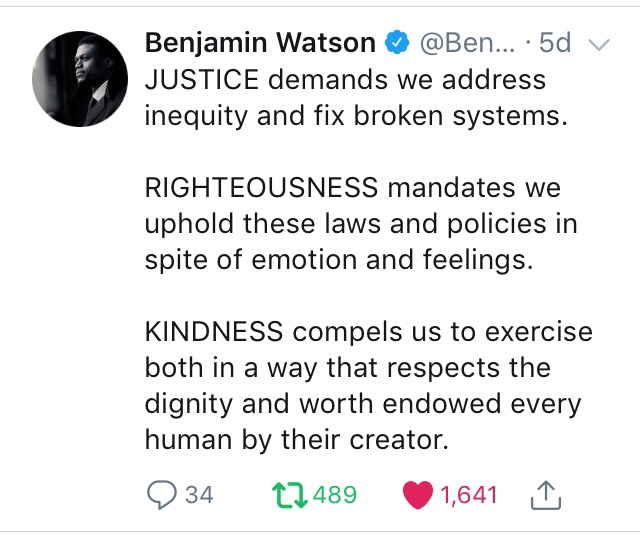
2. Reading and learning from people who love the Lord and lead by example. Benjamin Watson’s book completely obliterated my defenses and woke me up! His thoughtfulness and background made one, amazing story of why it’s important for we who profess to love Jesus Christ, to seek unity in His Name. He says it’s a “sin problem” more than a “skin problem.”  Reading his story allowed me to see life through the perspective of a person of color in our time instead of only through my own lenses.  I keep this book close for reminders.  I honestly look up to his family’s example in our time of life. If you do not have a black or brown friend to talk to about any of these issues, Watson’s book would be a great way to start if you are interested in the “whys” that seem so hard to relate/grasp on your own.

3. Loving Z and Keesha. I taught Z in the 5th grade, and I loved this silly, active boy fiercely. His mom raised him by herself and her example of being a mom has awed me from Day 1. She is not afraid to tackle tough issues, share truth, or even let the ignorant show their true colors. But as much as they mean to me, it was the fear of Z not coming home because someone might make quick judgments about him and hurt him that opened my eyes to a fraction of the fear moms have for their black and brown sons all over our country. God gave me a glimpse of this reality through Z and Keesha. It was triggered when she shared he was old enough to get his driving permit… all the news stories and sobbing mothers sharing their stories grabbed my heart instead of my defenses. Does that make sense?

By the way, I watched Z graduate this past month, and I’m so proud of him!

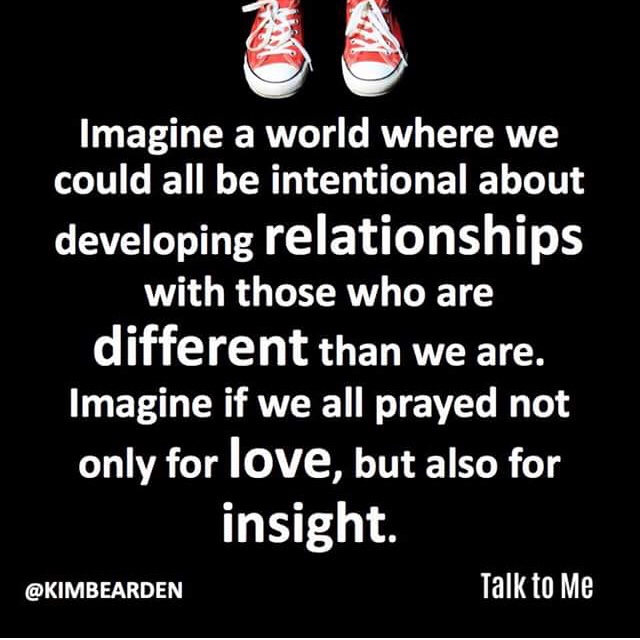
Like Kim Bearden’s meme above, and through her own life’s example, it’s the relationships we have with others, who are different than us, that will help us the most.

A colleague asked me why I was so obsessed with race reconciliation, and at the time, I could not articulate a good answer of what was going on inside of me. But God has been doing a work in me this whole time through the years, and it’s because as much as I love my students, He loves them so much more! So much, that He wants me to see them, understand them, and appreciate the beautiful people He designed and loves.  As so many in our society refuse to accept that racism is alive and well, this lie continues to hold back many of His beloved. He gave me the desire to seek unity and use the boldness He gave me to help others who want it, too.

Signs of Hope

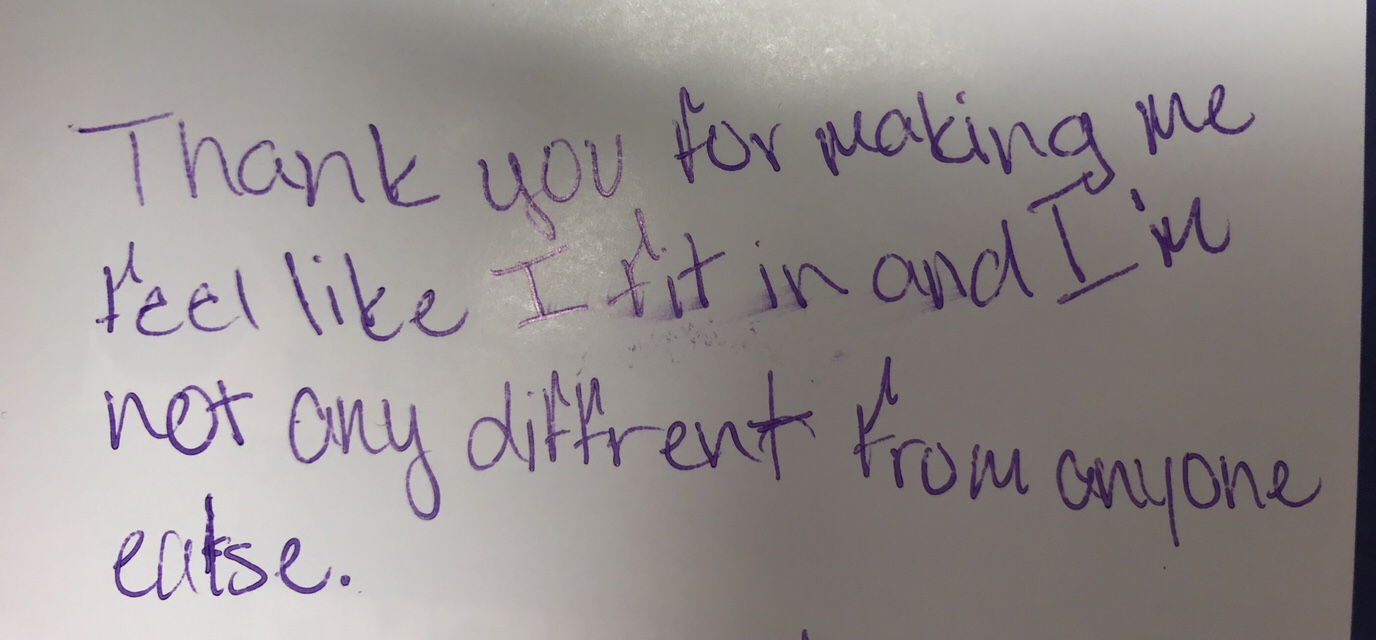
Asking some of my students of color how I could improve my teaching for other students of color, one sweet young lady told me this was the first year she didn’t feel differently than others.  She felt like she could be herself for the first time in her educational history.  This inspires me to keep growing in this area, but it also hurts my heart that it took so long for her to feel accepted in our educational system.

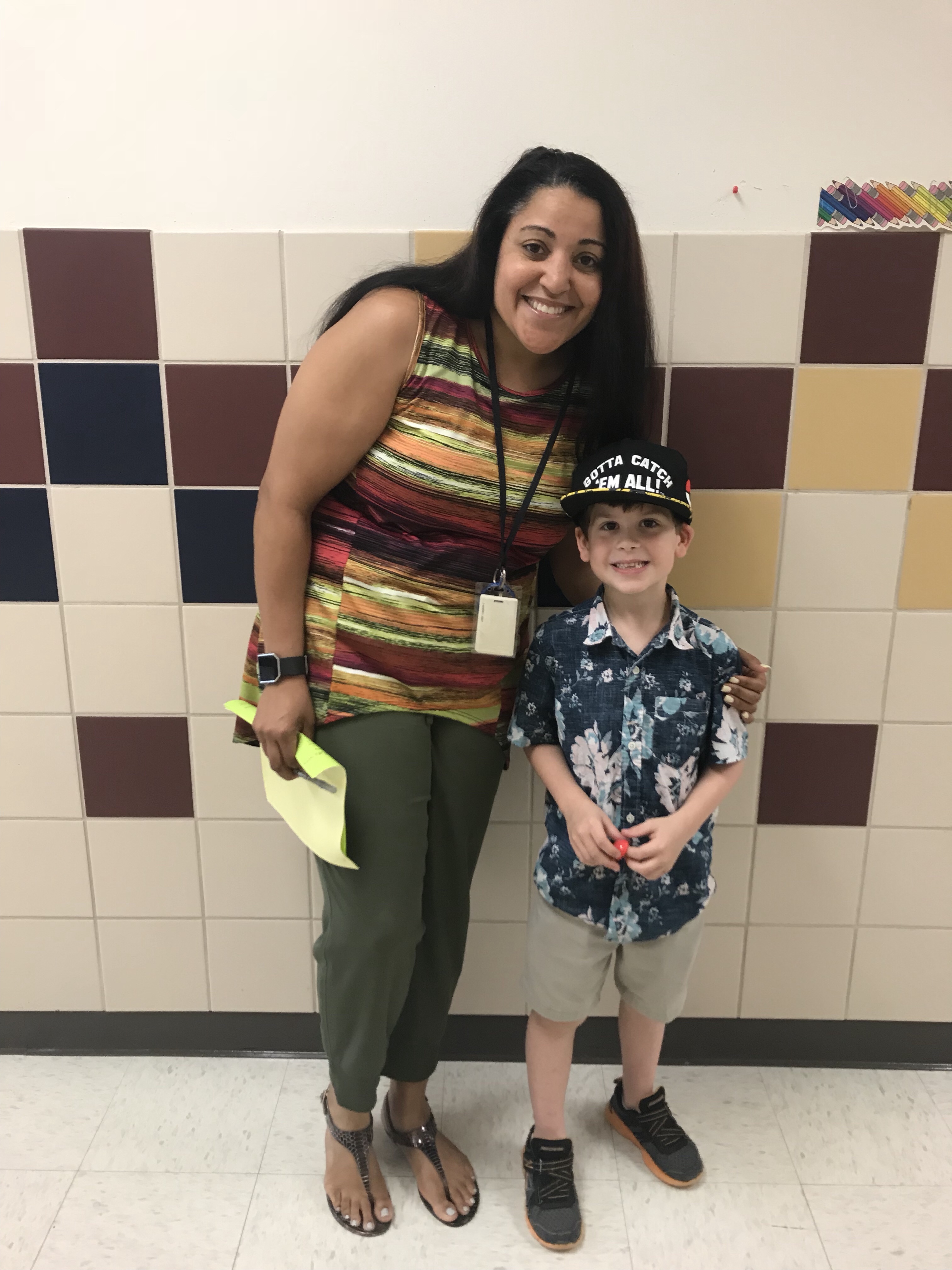
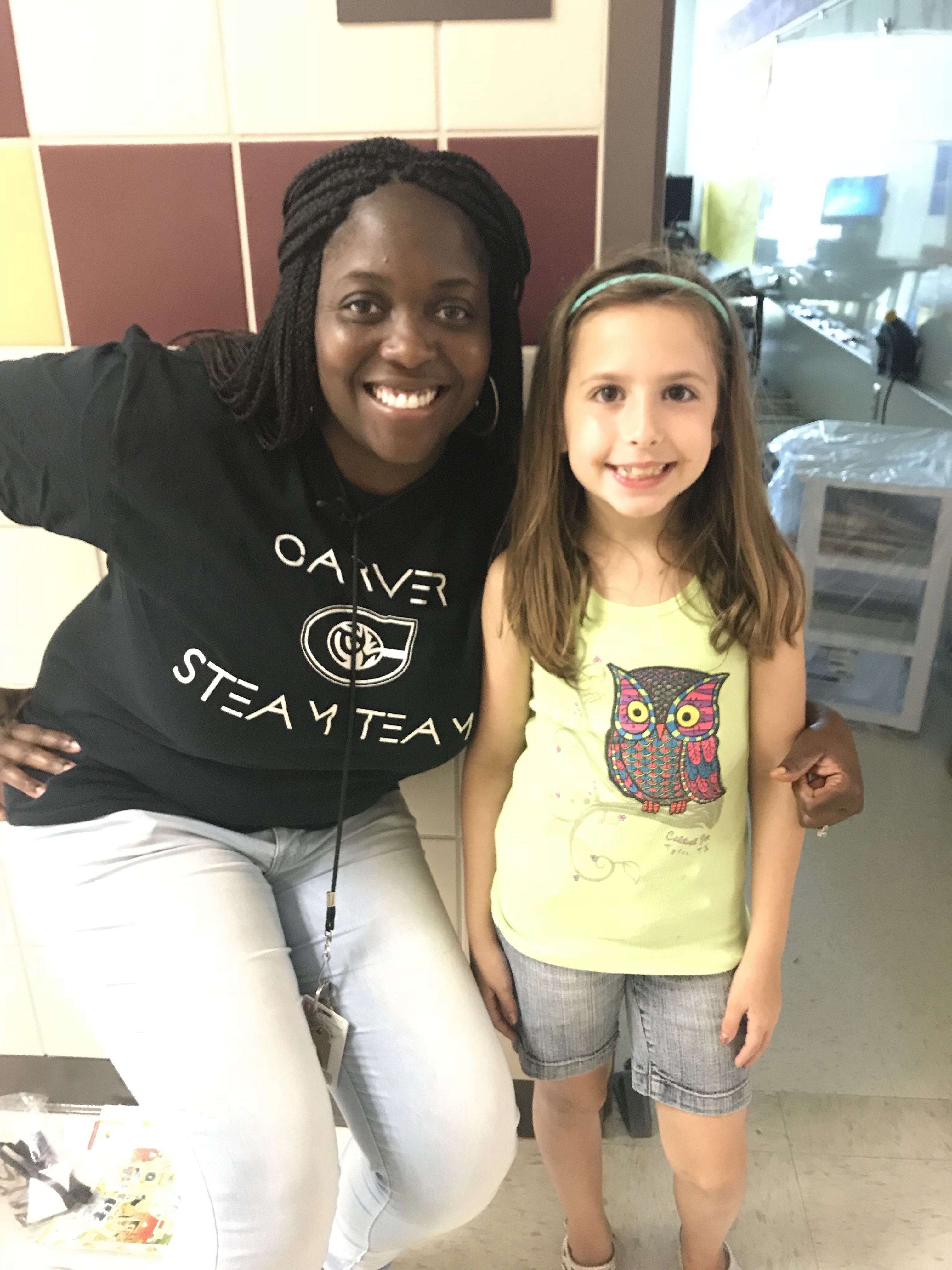
Both of my school-aged children, who attend the school I teach at, had these strong women as teachers. I love that my own children love their teachers, who are also Women of Color! And our friends are all different shades of melanin, too! This is different than my own childhood. The friendships we have, now, gives me hope for all of our roles in unity!  My children do not see different shades of melanin as a barrier but as something they accept as part of their friends.  I would not be surprised if they grew up to date or marry someone of a different color, nor would I discourage it.

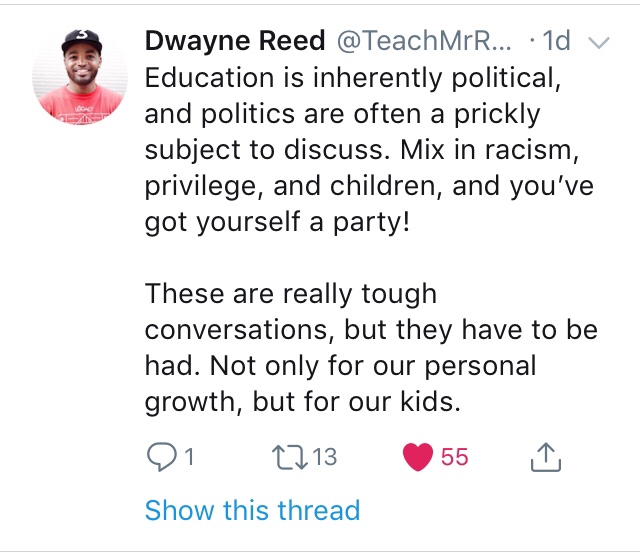
I also happened on this thread this past weekend! I loved reading it in its entirety and I loved that Mr. Reed was willing to discuss it in such a truthful & bold way. So many educators joined in!  This gives me hope that we can discuss this in peace and safety allowing more unity to take over.  Our kids deserve this! Our society needs this!

If you are on Twitter, please follow him, Benjamin Watson, and Kim Bearden!

The last thing that gives me hope that I’m truly a part of the solution is supporting our local chapter of Black Educators.

Joining this incredible group filled with these educators will ensure I’m learning and using best practices to help teach all of my students. I am especially grateful to have formed a friendship with the group’s president, Statia Paschel. She has embraced me and encouraged me, and I’ve already learned more about leadership from her example!

My Goal in this Post

The goal of my writing this post is to open the doors for more real talk, honest dialogue, and unity to grow where there has been division in the past.  I know that if someone as blind as I was can see the light, there has to be hope for everyone!

Please let me know your thoughts.  Please share your ideas.  Please correct me if I have made an oversight or am still in error.  I welcome your feedback.

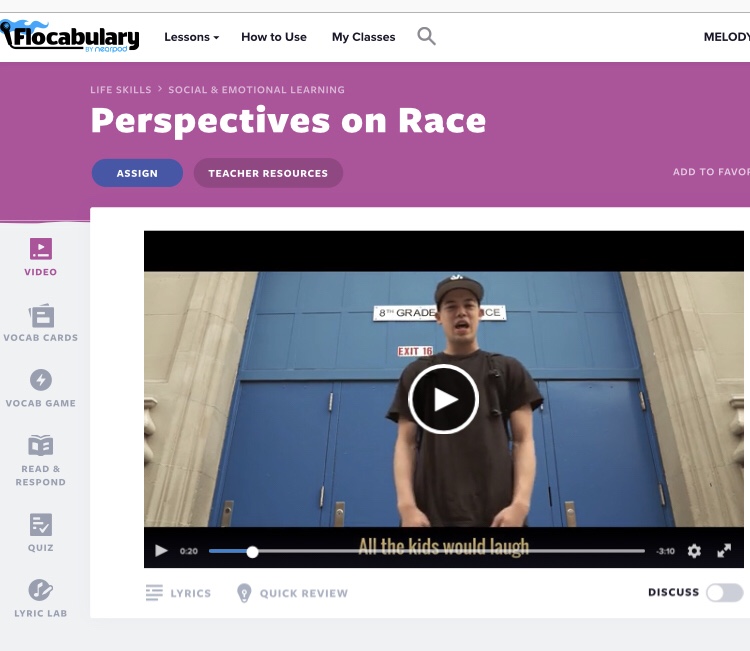
In closing, there are so many resources out there for all of us who desire more unity.  But if you know me, you know I love the online education tool of Flocabulary . My students loved one of their newest songs Perspectives on Race . I think the reason why I am on the right track is that I do not try to hide the fact of division but offer times of celebration and mourning of where our country is in this day and age.  I allow and welcome conversation about it all in my classroom.

Thank you you so much for reading.